Saturday, July 12, 2025

Is PLASTOCHEM Surface Cleaner and Disinfectant a Safer Alternative to Harsh Chemicals?


Is PLASTOCHEM Surface Cleaner and Disinfectant a Safer Alternative to Harsh Chemicals?

By PLASTOCHEM


❓ Still using strong chemical cleaners at home?

Most Indian households trust heavy-duty cleaners like Harpic and Lizol — but did you know these can damage surfaces, irritate your skin, and pollute indoor air? Isn’t it time to explore a smarter, safer option?


🔍 Let’s find out with this quick quiz!


1️⃣ Which cleaner can remove bacteria and tough stains without harsh chemical fallout?

  • 🅐 Traditional cleaners like Harpic and Lizol

  • 🅑 PLASTOCHEM’s pH-neutral, plant-based surface cleaner

Answer: 🅑.
PLASTOCHEM is specially designed to eliminate bacteria, grease, and stains using biodegradable surfactants and essential oils — without the harmful side effects of harsh acids or chlorine.


2️⃣ What’s inside your regular surface cleaner?

  • 🅐 Hydrochloric acid, sodium hypochlorite (bleach), synthetic surfactants, artificial fragrances

  • 🅑 Plant extracts, natural surfactants, essential oils, water

Answer:

  • 🅐 for most chemical cleaners like Harpic and Lizol

  • 🅑 for PLASTOCHEM

Fact: Conventional cleaners rely on strong mineral acids and synthetic ingredients. While effective on stains, they often cause skin irritation, respiratory issues, and environmental harm.


3️⃣ How does PLASTOCHEM’s formula protect your family & surfaces?

  • 🅐 It uses harsh chemicals for instant cleaning

  • 🅑 It avoids chlorine, ammonia, and corrosive acids, using gentle yet effective natural actives

Answer: 🅑.
PLASTOCHEM leverages plant-based surfactants derived from coconut and corn, plus essential oil fragrances, to deliver a powerful clean without toxic residues. That means safer hands, lungs, and long-lasting surfaces.


4️⃣ What do health experts say about frequent use of chemical disinfectants at home?

  • 🅐 It’s perfectly safe with no concerns

  • 🅑 WHO and other studies caution against routine use of harsh chemicals in living spaces

Answer: 🅑.
According to WHO guidelines, repeated exposure to chemical disinfectants indoors can contribute to allergies, respiratory issues, and even antimicrobial resistance.


5️⃣ What are real users saying about PLASTOCHEM?

  • 🅐 “It’s gentle on my hands and doesn’t have that harsh smell!”

  • 🅑 “It cleans just as well as chemical brands, but feels safer for my kids and pets.”

  • 🅒 Both of the above

Answer: 🅒.
From busy households to eco-conscious businesses, people love how PLASTOCHEM delivers effective cleaning without compromising health or the environment.


🏆 Ready to switch?

If you want a surface cleaner and disinfectant that’s tough on germs but gentle on you, PLASTOCHEM’s eco-friendly solution is your best choice.
No harsh acids, no chlorine, no compromise — just a fresh, effective clean.

Enhance Your Tile Projects with PLASTOCHEM Starlike Epoxy Grout


Enhance Your Tile Projects with PLASTOCHEM Starlike Epoxy Grout

When it comes to achieving a flawless, long-lasting tile installation, more professionals and businesses are turning to epoxy grout — and for good reason. Thanks to its superior durability and unmatched resistance to common issues like stains, mold, and mildew, epoxy grout has become the gold standard for both residential and commercial projects.

If you’re searching for the best solution to keep your tiles looking pristine year after year, our guide below explains why PLASTOCHEM Starlike Epoxy Grout stands out, how it differs from traditional grouts, and how to apply it for maximum performance


What is Epoxy Grout and Why Should You Choose It?

Epoxy grout is a two-part formulation made from an epoxy resin and a hardener, engineered to create an exceptionally strong, durable bond between tiles. Unlike standard cement-based grouts, epoxy grout is highly resistant to water, chemicals, and stains, making it the preferred option for high-moisture, heavy-traffic areas such as kitchens, bathrooms, hospitals, hotels, and industrial spaces.

Because epoxy grout won’t crack or crumble over time, it preserves the beauty and structural integrity of your tiled surfaces, delivering a finish that remains as impressive as the day it was installed.


Epoxy Grout vs. Traditional Cement Grout: The Clear Advantage

While both epoxy grout and cement grout serve to fill the spaces between tiles, their performance is vastly different. Traditional cement grout, made from a blend of Portland cement and sand, is affordable and easy to work with but tends to be porous, making it susceptible to staining, water absorption, and mildew growth.

Epoxy grout, on the other hand, provides outstanding adhesion and strength. It resists discoloration, harsh chemicals, and biological growth. Although it comes with a slightly higher initial investment, its longevity and reduced maintenance needs make it a cost-effective choice for commercial spaces that demand a clean, professional appearance day in and day out.


Why Choose PLASTOCHEM Starlike Epoxy Grout?

PLASTOCHEM  epoxy grout is specifically engineered to meet the highest industry standards. Formulated with advanced Italian quartz technology, it offers unmatched durability and a visually appealing finish that elevates any tiled surface.

  • Superior Strength & Durability: With exceptional compressive strength, PLASTOCHEM  ensures your tiled surfaces stay intact and beautiful even under the toughest conditions.

  • Stain & Chemical Resistance: Easily withstands exposure to harsh cleaning agents, grease, and spills, making it ideal for kitchens, restaurants, hospitals, and retail environments.

  • Mold & Mildew Protection: Its water-repellent properties stop mold and mildew in their tracks, maintaining a hygienic environment.

  • Low Maintenance: Unlike traditional grouts, it never needs sealing and significantly reduces upkeep costs.

  • Custom Aesthetics: Available in a wide range of colors, PLASTOCHEM Starlike allows you to create seamless or striking contrasts to suit your design vision.


How to Properly Apply Epoxy Grout for Long-Lasting Results

Achieving the best outcome with epoxy grout requires careful application. Follow these steps to ensure a professional finish:

  1. Surface Preparation:
    Verify that your tiles are firmly set and the adhesive is fully cured. Clean grout joints thoroughly, removing any dust, debris, or leftover adhesive. Avoid harsh chemicals; opt for water or mild detergents.

  2. Mix the Epoxy Grout:
    Combine the epoxy resin and hardener precisely as directed by PLASTOCHEM’s guidelines. Stir to a smooth, uniform consistency, taking care not to introduce air bubbles that could compromise the bond.

  3. Apply the Grout:
    Using a rubber float or squeegee, press the grout firmly into the joints, making sure it fills evenly and aligns with the tile edges. Immediately wipe away excess with a damp sponge using circular motions, but avoid oversaturating with water to maintain the grout’s integrity.

  4. Finishing Touches:
    Keep the area clear to allow proper curing. Use a soft, non-abrasive cloth to remove any remaining haze or film within the recommended time window. This ensures a clean, polished result.


Invest in Quality with PLASTOCHEM

For businesses and property owners seeking a robust, low-maintenance, and aesthetically superior solution, PLASTOCHEM Starlike epoxy grout delivers unmatched value. Its proven performance in both residential and commercial spaces — from luxury hotels to high-use commercial kitchens — makes it the smart choice for anyone who wants the very best for their tile installations.

Transform your tile surfaces with the strength and elegance of PLASTOCHEM  Epoxy Grout. Contact us today to learn more or to get a quote for your next project. Experience the PLASTOCHEM difference — where advanced technology meets exceptional craftsmanship.

Friday, July 11, 2025

PTFE (Polytetrafluoroethylene) Tape by PLASTOCHEM


PTFE (Polytetrafluoroethylene) Tape by PLASTOCHEM


What is PTFE Tape?

  • Also known as plumber’s tape, PTFE tape is wrapped around the threads of a male pipe before connecting it to a female fitting.

  • It helps create a tight, leakproof seal that prevents water, gas, or air from escaping the joint.

  • This simple yet effective thread sealant is used across many industries wherever watertight or airtight seals are essential.


Why Use PTFE Tape?

  • Ensures leak-free connections in piping systems.

  • Reduces friction during assembly, making it easier to tighten threaded joints.

  • Helps prevent threads from seizing or corroding over time.


Important Considerations When Choosing PTFE Tape

Before selecting the right tape for your application, it’s crucial to consider:

  • Color Identification:

    • Color often indicates the intended use.

      • Yellow: Typically required by municipalities for gas pipelines.

      • White or Gray: Common for general plumbing, aesthetically blends with pipe color.

  • Width Options:

    • ½" width: Ideal for smaller diameter pipes.

    • ¾" and 1": Best for larger pipes, offering more thread coverage.

  • Thickness (Mil):

    • Higher mil thickness reduces the number of wraps needed to form a secure seal.

  • Density:

    • Denser tapes resist stretching and ensure proper sealing by filling the threads effectively, minimizing potential leak paths.


Why Choose PLASTOCHEM PTFE Tapes?

  • PLASTOCHEM offers a complete range of PTFE thread sealant tapes, available in multiple colors, widths, thicknesses, and densities to suit diverse applications.

  • Our tapes are designed for professional reliability — making them the go-to choice for installers who demand consistent, secure results.


Key Benefits of PLASTOCHEM General-Purpose PTFE Tapes

  • Compatible with all threaded pipes, valves, and fittings.

  • Suitable for systems carrying:

    • Acids, alkalis, solvents

    • Steam, hot & cold water

    • LP & natural gas, oxygen

    • Almost any chemical application

  • They are:


How to Apply PTFE Tape — Expert Tips

  • Wrap tape in the same direction as the pipe threads to prevent unraveling during tightening.

  • Typically, 2–4 full wraps are sufficient, depending on tape thickness and pipe size.

  • Press the tape into the threads as you wrap for better adhesion.


Summary

With PLASTOCHEM’s premium PTFE tapes, you can ensure every threaded joint in your system is leakproof, long-lasting, and professionally sealed. Whether for water, gas, or industrial chemicals, our tapes deliver dependable sealing performance that professionals trust.v

PTFE (Polytetrafluoroethylene) Tape by PLASTOCHEM


What is PTFE Tape?

  • Also known as plumber’s tape, PTFE tape is wrapped around the threads of a male pipe before connecting it to a female fitting.

  • It helps create a tight, leakproof seal that prevents water, gas, or air from escaping the joint.

  • This simple yet effective thread sealant is used across many industries wherever watertight or airtight seals are essential.


Why Use PTFE Tape?

  • Ensures leak-free connections in piping systems.

  • Reduces friction during assembly, making it easier to tighten threaded joints.

  • Helps prevent threads from seizing or corroding over time.


Important Considerations When Choosing PTFE Tape

Before selecting the right tape for your application, it’s crucial to consider:

  • Color Identification:

    • Color often indicates the intended use.

      • Yellow: Typically required by municipalities for gas pipelines.

      • White or Gray: Common for general plumbing, aesthetically blends with pipe color.

  • Width Options:

    • ½" width: Ideal for smaller diameter pipes.

    • ¾" and 1": Best for larger pipes, offering more thread coverage.

  • Thickness (Mil):

    • Higher mil thickness reduces the number of wraps needed to form a secure seal.

  • Density:

    • Denser tapes resist stretching and ensure proper sealing by filling the threads effectively, minimizing potential leak paths.


Why Choose PLASTOCHEM PTFE Tapes?

  • PLASTOCHEM offers a complete range of PTFE thread sealant tapes, available in multiple colors, widths, thicknesses, and densities to suit diverse applications.

  • Our tapes are designed for professional reliability — making them the go-to choice for installers who demand consistent, secure results.


Key Benefits of PLASTOCHEM General-Purpose PTFE Tapes

  • Compatible with all threaded pipes, valves, and fittings.

  • Suitable for systems carrying:

    • Acids, alkalis, solvents

    • Steam, hot & cold water

    • LP & natural gas, oxygen

    • Almost any chemical application

  • They are:

    • Weather-resistant and flexible

    • Non-hardening and non-toxic

    • Non-stick and non-flammable


How to Apply PTFE Tape — Expert Tips

  • Wrap tape in the same direction as the pipe threads to prevent unraveling during tightening.

  • Typically, 2–4 full wraps are sufficient, depending on tape thickness and pipe size.

  • Press the tape into the threads as you wrap for better adhesion.


Summary

With PLASTOCHEM’s premium PTFE tapes, you can ensure every threaded joint in your system is leakproof, long-lasting, and professionally sealed. Whether for water, gas, or industrial chemicals, our tapes deliver dependable sealing performance that professionals trust.

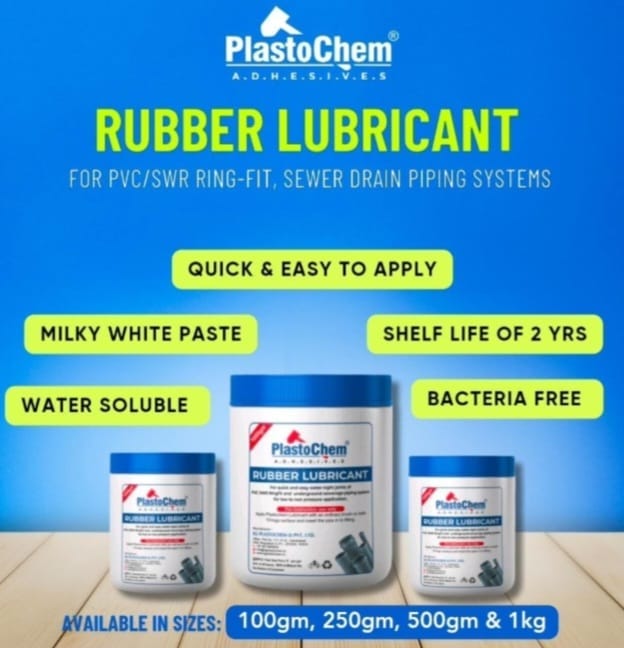
PLASTOCHEM RUBBER LUBRICANT


PLASTOCHEM RUBBER LUBRICANT

Within the comprehensive SWR (Soil, Waste, and Rainwater) product range offered by PLASTOCHEM, rubber lubricant plays a vital role in ensuring efficient and hassle-free installation of Pushfit or rubber ring jointed pipes and fittings. Unlike adhesives or solvent cements, this rubber lubricant is a specialized compound uniquely formulated to act purely as a lubricating agent. It does not chemically bond or weld the pipes together; instead, it significantly reduces friction, making the insertion and alignment of pipes into sockets with rubber seals remarkably smooth and effortless. This facilitates a snug, accurate fit without the need for excessive force, minimizing the risk of damage to both the rubber rings and the pipe ends.

The use of PLASTOCHEM rubber lubricant ensures that the Pushfit systems achieve a secure and reliable joint that maintains its integrity under operational pressures. In fact, Ashirvad Pushfit systems, when assembled with the aid of quality lubricants like those provided by PLASTOCHEM, are rigorously tested to withstand pressures up to 5 kg/cm², ensuring dependable performance even under demanding conditions. Additionally, by allowing the rubber rings to seat correctly and maintain uniform contact, this lubricant helps prevent leaks and contributes to the long-term durability of the piping system.

Furthermore, PLASTOCHEM’s rubber lubricant is formulated to be compatible with the elastomers used in pipe seals, ensuring it does not cause any swelling, hardening, or deterioration of the rubber components over time. This makes it an essential accessory not only for ease of installation but also for safeguarding the life of the joints.

Why uPVC Solvent Cement is the Ideal Choice for High-Pressure Drainage Systems


Why uPVC Solvent Cement is the Ideal Choice for High-Pressure Drainage Systems

High-pressure drainage systems endure significantly greater stress than standard piping systems. Designed to manage large volumes of wastewater and demanding industrial applications, these systems require not only robust pipes but also dependable connections. uPVC pipes are widely preferred for such installations due to their excellent strength and corrosion resistance. However, the true reliability of any high-pressure system depends on the quality of its joints — making uPVC solvent cement indispensable. This specialized cement creates strong, leak-proof bonds that withstand continuous pressure, ensuring system integrity over the long term.


The Critical Role of Solvent Cement in Leak-Proof Drainage Systems

Solvent cements function as chemical welding agents that permanently fuse plastic pipes and fittings, such as uPVC, PVC, and CPVC, into a single, solid structure. Unlike mechanical fittings, solvent cement chemically integrates the surfaces, eliminating potential leak paths. This makes them essential for plumbing and high-pressure drainage applications, where leak prevention and system durability are paramount.


Key Advantages of Using uPVC Solvent Cement in High-Pressure Systems

1. Exceptional Bonding Strength

uPVC solvent cement delivers outstanding adhesion, ensuring pipe joints are secure and leak-free. This robust bonding is critical for high-pressure systems, where even minor leaks can escalate into major failures.

2. Simple and Efficient Application

This cement requires minimal surface preparation and can be applied quickly, reducing installation time and labor costs. Its user-friendly application process makes it ideal for large-scale projects.

3. Long-Lasting Durability

uPVC solvent cement offers excellent resistance to a wide range of chemicals and harsh environmental conditions, safeguarding the drainage system’s performance for years — even under constant high pressure.


Additional Benefits:

  • Chemical Resistance: Withstands exposure to various chemicals in wastewater, including acids and alkalis, ensuring long-term integrity.

  • Pressure Resilience: Maintains a tight, flexible seal capable of handling substantial internal stress without compromise.

  • Low Maintenance: Once installed, requires virtually no maintenance, minimizing long-term operational costs and reducing the need for frequent inspections or repairs.


Why Choose .PLASTOCHEM Solvent Cements?

.PLASTOCHEM Pipe Fix solvent cements are engineered for superior performance across a range of applications, from low-pressure domestic systems to high-pressure industrial pipelines. Our formulations are:

  • Fast-setting and durable, suitable for CPVC, uPVC, and PVC installations.

  • Low in VOCs, promoting safer handling and compliance with environmental regulations.

  • Tested to international standards like ASTM, ensuring quality and long-lasting strength.

Specifically, our uPVC 206 solvent cement is designed for potable water, agriculture, and industrial drainage systems. It provides a quick-set, high-strength bond while being environmentally responsible.


Learn More

Explore our blog, “.PLASTOCHEM Pipes Fix: A Top Choice for CPVC and uPVC Pipes and Fittings,” to see how our products can elevate your next high-pressure drainage project.


Conclusion:
For high-pressure drainage systems, uPVC solvent cement is not just an option — it’s a necessity. It guarantees robust, leak-proof joints that endure demanding conditions, delivering unmatched reliability and peace of mind. By choosing .PLASTOCHEM, you invest in quality, safety, and long-term performance.

The Advantages of CPVC Solvent Cement for Joining Pipes and Fittings


The Advantages of CPVC Solvent Cement for Joining Pipes and Fittings

In plumbing, the durability of your system depends on the strength of its joints. A single leak can waste up to 70 litres of water daily—costing you money and precious resources. That’s why secure, leak-proof connections are essential. If you’re working with CPVC pipes, using CPVC solvent cement is the smartest way to achieve a strong, long-lasting bond.


What is CPVC Solvent Cement?

CPVC solvent cement is a specialized adhesive designed to join CPVC pipes and fittings. Unlike regular glue, it chemically softens and fuses the pipe surfaces, creating a seamless, homogenous joint that’s as strong as the pipe itself. This bond stands up to heat, pressure, and chemicals, ensuring a plumbing system that stays leak-free for years.


Why Use CPVC Solvent Cement?

1. Superior Leak-Proof Strength

It creates a rock-solid bond that keeps your plumbing system watertight and dependable, eliminating worries about leaks.

2. Fast-Setting for Quick Jobs

The cement sets in seconds, allowing for rapid assembly and minimal downtime.

3. Easy for Anyone to Apply

Simple application means even DIY enthusiasts can achieve professional results.

4. Resistant to Harsh Chemicals

Perfect for environments exposed to acids, bases, and solvents—whether at home or in industrial settings.

5. Healthier Choice with Low VOCs

Low VOC emissions make it safer for indoor projects and healthier for your family.


Where Can You Use CPVC Solvent Cement?

  • Hot & Cold Water Lines: Ensures stable performance in all temperatures.

  • Industrial Piping: Handles demanding conditions with ease.

  • Fire Sprinkler Systems: Delivers the reliability needed for safety systems.


Why Choose .PLASTOCHEM CPVC Solvent Cement?

At .PLASTOCHEM, we prioritize quality and trust. Our Pipe Fix uPVC 206, CPVC 307, and PVC 101 solvent cements are engineered to meet top industry standards, delivering strong, eco-friendly solutions for CPVC and PVC applications. From residential plumbing to industrial projects, we have the right product to keep your systems running flawlessly.


Ready to secure your pipes with confidence?
Explore our range of CPVC solvent cements today and build a leak-proof system that lasts.

PLASTOCHEM PVC Solvent Cement


What is PVC Solvent Cement?

PVC solvent cement is a special adhesive designed to join PVC pipes and fittings. Unlike ordinary glue, it works by chemically bonding the PVC surfaces, creating a strong, permanent joint. When applied, the cement softens the PVC surfaces, allowing them to fuse together and form a solid bond.

It’s important to know that not all PVC solvent cements are the same. Different types are formulated for specific needs—such as low VOC cements for indoor use, high-strength versions for heavy-duty applications, or products engineered for extreme temperatures.

PVC solvent cement is a time-tested, versatile solution, essential in the piping industry. Choosing the right type, like  PLASTOCHEM Solvent Cement, ensures a strong, leak-proof, and durable connection.


Key Features of PVC Solvent Cement

PVC solvent cement offers numerous features that make it the preferred choice for joining PVC pipes and fittings:

  1. Fast Acting
    Sets within minutes, speeding up installation without compromising bond strength.

  2. Heat Resistant
    Suitable for both hot and cold environments, ensuring reliable performance across varied conditions.

  3. Chemical Bonding
    Bonds at a molecular level, creating joints that remain strong and secure over time.

  4. Water Resistant
    Ideal for plumbing, the cement can withstand continuous water pressure without breaking down.

  5. Easy to Use
    Simple application process—clean, apply, join, and allow to cure—makes it accessible for both professionals and DIY enthusiasts.


Applications of PVC Solvent Cement

While primarily used for joining PVC pipes and fittings, PVC solvent cement has several other important applications:

  • Plumbing:
    Ensures secure connections in residential, commercial, and industrial piping systems.

  • Chemical Processing:
    Joins PVC pipes used to transport various chemicals, maintaining leak-proof operations.

  • Vinyl Flooring:
    Used to bond vinyl tiles to subfloors, delivering long-lasting floor installations.

  • Pools & Spas:
    Connects PVC piping in filtration and circulation systems, ensuring leak-free operation even under continuous water flow.

When using PVC solvent cement, always follow the manufacturer’s instructions. This includes properly cleaning the surfaces, applying the cement evenly, and allowing enough curing time. Additionally, wear gloves and ensure good ventilation, as the solvents can be hazardous if mishandled.


 PLASTOCHEM PVC Solvent Cement 

 PLASTOCHEM PVC solvent cement is a high-quality solution trusted by professionals and millions of customers nationwide. Manufactured under strict quality controls, it ensures consistent performance and long-lasting joints.

Available in three types—CPVC Solvent Cement, UPVC Solvent Cement, and PVC Solvent Cement—PLASTOCHEM products comply with ASTM standards and suit all SDR/SCH/ASTM classes. They’re offered in various sizes to meet diverse application needs, from plumbing and drainage to agricultural systems.

With its rapid setting time and proven durability, PLASTOCHEM is the go-to choice for leak-proof, robust pipe and fitting installations.


Need help choosing the right PVC solvent cement for your project?
Contact us today for expert advice or to place an order.

Wednesday, July 9, 2025

Plastochem Tile Adhesives


Elevate Your Tiling Projects with Plastochem Tile Adhesives

About Plastochem Tile Adhesives

Plastochem Tile Adhesives are advanced, polymer-modified cementitious adhesives designed to meet the highest standards of modern tiling applications. Manufactured using carefully selected Portland cement, graded fine sand, and high-quality polymers, Plastochem’s formulations ensure outstanding strength, flexibility, and ease of use.

Whether for homes, commercial spaces, or large industrial installations, Plastochem offers specialized adhesive solutions that cater to diverse surfaces and demanding environments.


Why Choose Plastochem Tile Adhesives?

Superior Bonding Strength
Plastochem Tile Adhesives create a strong and lasting bond between tiles and substrates, preventing common issues such as cracking, debonding, or slipping — even under heavy foot traffic and challenging conditions.

Versatile Applications
Our adhesives are engineered for fixing ceramic, vitrified, and porcelain tiles, natural & engineered stones, and glass mosaics on a wide range of surfaces including:

  • Existing tiles

  • Cement plaster & concrete

  • Screeds & plywood

  • Metal and specialized substrates
    Suitable for both walls & floors, interiors & exteriors.

Enhanced Workability & Open Time
Plastochem adhesives are easy to mix and apply, with excellent spreadability that reduces labor time. The extended open time allows flexibility during installation, helping achieve a perfect finish without rushing.

Water & Weather Resistance
Our formulations resist moisture penetration, making them ideal for wet areas like bathrooms, kitchens, swimming pools, and outdoor facades.

Designed for Modern Tiles
With tiles now becoming larger and heavier, Plastochem Tile Adhesives deliver the exceptional adhesion needed to handle vibrations and thermal movements — critical for external walls and high-rise buildings.

Advantages of Using Plastochem Tile Adhesives

  • 🏗 Fast & Easy Application: Pre-blended with precise proportions; just add water and mix.

  • 🛠 Minimized Shrinkage: Maintains integrity without hollow spots.

  • 💧 Reduces Efflorescence: Ensures long-term aesthetic appeal.

  • 🌿 Eco-Friendly: Low VOC content, contributing to healthier interiors.

  • 🎨 Perfect for all styles: From small ceramic tiles to large-format slabs and natural stones.

Applications at a Glance

  • Residential & commercial flooring

  • Wet areas like bathrooms & kitchens

  • Swimming pools & water features

  • Facades & exterior walls

  • Industrial or high-traffic areas

Why Trust Plastochem?

At Plastochem, we blend innovation with strict quality control to deliver adhesives that professionals rely on for critical projects. Our tile adhesive range stands as a testament to durability, performance, and a finish that lasts — ensuring every tile stays perfectly in place for years to come.

Plastochem Epoxy Grout


Discover the Power of Plastochem Epoxy Grout!

Looking for a grout solution that stands the test of time?
Say goodbye to stained, cracked, or moldy joints — and hello to Plastochem Epoxy Grout. Engineered with cutting-edge Italian quartz technology, our grout guarantees a flawless, long-lasting finish, even in the toughest environments.

Perfect for kitchens, bathrooms, swimming pools, and high-traffic commercial areas, Plastochem Epoxy Grout combines beauty with unmatched durability.


🔍 Questions You Might Have

Q: Why should I choose epoxy grout over regular cement grout?
✅ Epoxy grout is completely water-resistant, highly stain-proof, and doesn’t allow mold or mildew to grow — unlike cement grout, which absorbs moisture and can discolor over time.

Q: Does epoxy grout really last longer?
✅ Yes! Its strong bonding and chemical resistance mean fewer repairs and replacements, saving you money and hassle in the long run.

Q: Is it hard to clean epoxy grout?
✅ Not at all. Plastochem Epoxy Grout is non-porous, so spills wipe right off without seeping in. No more scrubbing or harsh chemicals needed.

Q: Can I get a color that matches my tiles?
✅ Absolutely. Plastochem Epoxy Grout comes in a wide range of colors, so you can perfectly match or creatively contrast with your tile design.

🎯 Ready to upgrade your tile project?
Choose Plastochem Epoxy Grout for a stunning, worry-free finish that lasts for years.


Plastochem Plumber’s Tape – FAQs


Plastochem Plumber’s Tape – FAQs

Q: Why are there so many different types of tapes available for plumbing?

A:
Because each tape is designed with specific features and benefits to suit different applications. When selecting a tape, it’s important to consider:

  • The width of the pipe you’re working with,

  • The color coding for visual identification of what flows through the pipe,

  • And the chemical compatibility with the substance inside the line.


Q: What makes Plastochem plumber’s tape unique?

A:
Plastochem plumber’s tape stands out because it comes in a wide range of colors, widths, thicknesses, and densities, making it easy to find the perfect fit for your application. This ensures secure seals and long-lasting performance.

Q: Why does color matter when choosing thread sealant tape?

A:
Colors serve as quick visual indicators of what flows through a piping system. For example:

  • Yellow tape is required by many municipalities for gas lines.

  • White or gray tape is generally used for water systems and looks more attractive on similar-colored pipes.

Q: How do I choose the right width of tape?

A:
It depends on your pipe size:

  • ½" tape is perfect for smaller diameter pipes.

  • ¾" and 1" widths are recommended for larger pipes, as they provide better coverage of the threaded sections and help create a more reliable seal.

Q: What do thickness and density mean for plumber’s tape?

A:

  • Thickness (measured in mils): A thicker tape requires fewer wraps to create a watertight or airtight seal.

  • Density: A higher density tape is less likely to stretch excessively, allowing it to compact properly into thread roots. This minimizes gaps that could lead to leaks.

Q: What is Plastochem’s most popular thread sealant tape?

A:
Our general-purpose PTFE tape is the top choice. It’s incredibly versatile and can be safely used on all threaded pipes, valves, and fittings carrying:

  • Acids and alkalis

  • Solvents

  • Steam and hot or cold water

  • LP gas, natural gas, oxygen

  • And nearly any chemical you need to transport.

Q: What are the key benefits of Plastochem PTFE tapes?

A:
Plastochem PTFE tapes are:

  • Weather-resistant

  • Flexible and non-hardening

  • Non-toxic and non-stick

  • Non-flammable

  • Reliable even under tough conditions, providing a durable and secure seal.

Rubber Lubricant by Plastochem


Rubber Lubricant by Plastochem

In our advanced SWR (Soil, Waste & Rainwater) product range, Plastochem offers a high-performance Rubber Lubricant, specially formulated to make the installation of Pushfit and rubber ring pipes and fittings smooth and hassle-free.

Unlike traditional adhesives or solvent cements, this rubber lubricant is not a glue and not a bonding agent. Instead, it is a unique lubricating solution designed to reduce friction, allowing pipes to slide easily into fittings without disturbing or damaging the rubber sealing rings inside. This ensures a secure, leak-proof joint every time, while also protecting the integrity of the rubber rings.

Plastochem’s rubber lubricant is rigorously tested to withstand internal pressures up to 5 kg/cm², making it a reliable choice for residential, commercial, and industrial plumbing systems. Its application speeds up installation, prevents unnecessary stress on rubber seals, and maintains a neat, professional finish.

Tuesday, July 8, 2025

Plastochem’s high-quality UPVC solvent cement


PLASTOCHEM


1️⃣ Why might UPVC pipes not stick properly after applying solvent cement?

A) The pipes are too new
B) The surfaces were dirty, greasy, wet, or uneven
C) The cement was applied perfectly evenly

Correct Answer: B
Dirty, greasy, wet, or uneven surfaces prevent proper bonding. Always clean and prepare with a primer, then apply cement evenly.

2️⃣ What’s the best way to ensure pipes bond well?

A) Skip cleaning to save time
B) Use a primer and clean surfaces before applying cement
C) Apply cement only on one side

Correct Answer: B
Always clean the surfaces and use a primer. Apply cement evenly on both pipe and fitting.

3️⃣ Why do leaks at the joint often occur?

A) Cement was not given enough time to dry
B) Pipes were loosely fitted or twisted improperly
C) Pipe and fitting sizes didn’t match
D) All of the above

Correct Answer: D
Leaks usually come from insufficient curing time, loose connections, or mismatched sizes.

4️⃣ How long should you let UPVC solvent cement set before testing with water?

A) 5 minutes
B) 15-20 minutes
C) Immediately after joining

Correct Answer: B
Wait at least 15-20 minutes before applying any water pressure.

5️⃣ What causes solvent cement to dry too quickly?

A) Cold weather
B) Exposure to air or hot temperatures
C) Using expired cement

Correct Answer: B
Excessive exposure to air and heat causes the cement to harden before application.

6️⃣ How can you prevent the cement from drying too fast?

A) Leave the lid off the container
B) Work quickly and in small sections
C) Always apply under direct sunlight

Correct Answer: B
Keep the container closed when not in use and work quickly in shaded or cool areas.

7️⃣ What leads to excess cement on the outside of the joint?

A) Using too little cement
B) Not wiping off excess right after joining
C) Applying too much cement

Correct Answer: B and C
Apply only a thin layer of cement and immediately wipe off any excess with a clean cloth.

8️⃣ How long should you hold pipes together after applying cement to ensure a strong joint?

A) 5 seconds
B) 30 seconds
C) Not necessary to hold

Correct Answer: B
Hold firmly for at least 30 seconds to allow the bond to set.

9️⃣ What’s important to check on your UPVC solvent cement before using it?

A) Color of the container
B) Expiry date
C) Brand logo

Correct Answer: B
Expired cement may lose adhesive strength, leading to weak joints.

✅ Final Tip from Plastochem

By knowing these answers, you’re on your way to leak-proof, long-lasting UPVC installations. Always trust Plastochem’s high-quality UPVC solvent cement for secure, professional results.


Why is CPVC (Chlorinated Polyvinyl Chloride) widely used in plumbing?


📝 CPVC Solvent Quiz


🌟 Introduction

Test your knowledge about CPVC pipes, CPVC solvent, and how to use them effectively. Ready? Let’s get started!


1️⃣ Why is CPVC (Chlorinated Polyvinyl Chloride) widely used in plumbing?

a) It’s lightweight and flexible
b) It’s durable, heat-resistant, and easy to install
c) It’s cheaper than all other materials
d) It comes in more colors

Correct Answer: b) It’s durable, heat-resistant, and easy to install.


2️⃣ What is the primary role of CPVC solvent in plumbing systems?

a) To paint the pipes for protection
b) To clean the pipes before use
c) To create a chemical bond between pipes and fittings
d) To lubricate the pipes for easier installation

Correct Answer: c) To create a chemical bond between pipes and fittings.


3️⃣ How does CPVC solvent work differently from ordinary glue?

a) It simply sticks two surfaces together
b) It softens and fuses the surfaces to form a strong, leak-proof bond
c) It dries into a hard shell around the joint
d) It only works as a temporary seal

Correct Answer: b) It softens and fuses the surfaces to form a strong, leak-proof bond.


4️⃣ Which steps are involved in correctly using CPVC solvent? (Select all that apply)

a) Ensure surfaces are clean and dry
b) Apply solvent generously to both pipe and fitting
c) Twist slightly when joining to spread solvent
d) Pressurize immediately after joining

Correct Answers: a), b), and c).
Let it cure for about 24 hours before pressurizing.


5️⃣ What are the key benefits of using CPVC solvent?

a) Creates a strong chemical weld
b) Resistant to high temperatures and pressures
c) Effective against many chemicals
d) Complicated to use and requires special tools

Correct Answers: a), b), and c).
(It’s actually very easy to use and doesn’t need special tools.)


6️⃣ What is CPVC solvent cement?

a) A paint for CPVC pipes
b) A thicker, enhanced type of CPVC solvent for an even stronger bond
c) A mechanical clamp for joints
d) A cleaning fluid for CPVC pipes

Correct Answer: b) A thicker, enhanced type of CPVC solvent for an even stronger bond.


7️⃣ Which factors can affect the price of CPVC solvent? (Select all that apply)

a) Brand reputation
b) The weather
c) Quantity purchased
d) Type of solvent (standard vs. cement)
e) Retailer or purchase channel

Correct Answers: a), c), d), and e).


8️⃣ Where can you buy high-quality CPVC solvent?

a) Local hardware stores
b) Directly from trusted manufacturers like plastochem Pipes
c) From unverified online listings without checking quality
d) Both a) and b)

Correct Answer: d) Both a) and b).
(But always choose reliable suppliers to ensure product quality.)


✅ Final Tip

For the best performance and longevity of your plumbing systems, trust plastochem Pipes for premium CPVC solvent and CPVC solvent cement.

Solvent Cements for Leak-Free Plumbing


Things to Keep in Mind When Choosing Solvent Cements for Leak-Free Plumbing


Building a robust plumbing system takes more than just picking high-quality pipes and fittings. It also requires the right solvent cement to bond these components securely. If the solvent cement isn’t compatible with your pipe material, you risk weak joints that could fail over time.

With so many solvent cements on the market, each offering unique benefits, it’s important to make an informed choice. Whether you’re a professional contractor or a DIY homeowner fixing leaks, this guide will help you pick the best solvent cement for long-lasting, leak-free plumbing.

How to Choose the Right Solvent Cement

1. Pipe Compatibility

Always start by identifying your pipe material.

  • PVC solvent cement is designed for joining PVC pipes and fittings. Unlike typical adhesives, it chemically softens and fuses the surfaces at the molecular level, creating a permanent, watertight bond in minutes.

  • CPVC solvent cement contains CPVC resin, stabilisers, and fillers dissolved in a solvent. It chemically bonds CPVC pipes and fittings, ensuring a durable joint that withstands higher temperatures.

2. Chemical Effectiveness and Process Considerations

The solvent’s chemical properties impact not just how fast it bonds but also how cleanly it works. Think about:

  • Ease of removal (isolation): Can excess solvent be easily cleaned or removed, preventing contamination in sensitive systems?

  • Downstream processing: Is it simple to remove the solvent by distillation or other means? This affects long-term maintenance costs and efficiency.

3. Industrial and Environmental Factors

For large-scale or industrial applications, look at:

  • Boiling and freezing points: Crucial for processes that involve temperature variations.

  • Density: Influences how the solvent is handled and stored.

  • Recyclability: Using recoverable solvents lowers costs and reduces environmental impact.

4. Health and Safety

Solvents can pose serious health risks if mishandled. Evaluate toxicity data to minimize risks from direct exposure—whether acute or long-term.

5. Quality Standards

For critical applications—like food, pharma, or high-purity water systems—solvent quality matters immensely. Using high-purity solvent cement ensures minimal contamination and reliable performance.

6. Total Cost

Price isn’t just about the sticker tag. Consider the full cost: purchasing, storing, using, and eventually disposing of the solvent cement.

7. Regulatory Compliance

Ensure your solvent cement meets local and international standards (like REACH, NSF, or ISI certifications) to stay compliant and avoid costly legal issues.

Recommended Solution: Weld-On Solvent Cements by Plastochem

For most plumbing applications, Plastochem’s Weld-On range of solvent cements is a trusted choice.

  • Available in heavy, medium, and regular body weights to match your project’s needs.

  • Certified by NSF and ISI for safety and performance.

  • Low-VOC, industrial-grade formulations that provide strong, fast-setting bonds.

  • Suitable for all classes and schedules of PVC and CPVC pipes.

Protect What Matters Most with Plastochem Trubuild Waterproofing Solutions


Protect What Matters Most with Plastochem Trubuild Waterproofing Solutions


🏠 Imagine this…

It’s a beautiful rainy morning — until you notice water dripping from your ceiling, damp patches creeping up your walls, or an unexpected puddle forming in your basement.

Sadly, these are all-too-common problems during monsoons or after plumbing mishaps. Left unchecked, water seepage can lead to concrete deterioration, stubborn mould growth, weakened structures, peeling paint, foul odours — and even serious health concerns.

Even minor leaks today can become costly structural nightmares tomorrow, slashing your property’s value and appeal.

That’s where Plastochem Trubuild Waterproofing Solutions come in — your first line of defence against water damage, and your trusted partner in preserving the life, beauty, and safety of your home or commercial building.


💧 What is Waterproofing?

Waterproofing is the process of making a structure completely resistant to water penetration by applying a protective barrier.

This barrier — often in the form of a liquid or cementitious waterproof coating — is carefully applied to areas prone to water exposure. It stops water from seeping into surfaces, keeping your interiors and exteriors dry, strong, and aesthetically flawless.

Whether it’s your terrace, bathroom, basement, water tank, or even external walls — investing in high-quality waterproofing ensures your structure stands resilient against rain, groundwater or any kind of moisture intrusion.


🌟 Why is Waterproofing So Important?

✔ Structural Strength & Longevity

Without proper waterproofing, water gradually seeps into walls, ceilings, and foundations, causing cracks, rusting reinforcements, and compromising the very skeleton of your building.

✔ Healthier Living Spaces

Moisture promotes the growth of mold and mildew, which not only ruin furniture and interiors but also trigger allergies and respiratory problems.

✔ Save on Expensive Repairs

Prevent water damage before it starts — avoiding costly renovations, repainting, or structural repairs later.

✔ Maintain Property Value

A water-damaged home or building loses its market appeal and value. Proper waterproofing preserves your investment, keeping it attractive for buyers and tenants.


🛡 The Plastochem Trubuild Advantage

At Plastochem, we understand that every structure is different — with unique surfaces and challenges. That’s why our Trubuild Waterproofing Solutions are tailored to suit a wide range of needs, offering you complete, long-term protection.

With over 25 years of expertise in building, tiling, and waterproofing solutions, we’ve developed an extensive range of high-performance products that protect both new constructions and existing structures.


🔍 How is Waterproofing Done?

Waterproofing is best entrusted to trained professionals, but here’s a simple look at how the process works:

1️⃣ Surface Preparation:
The area is thoroughly cleaned of dust, oil, old paint or debris to ensure the waterproofing chemical bonds perfectly.

2️⃣ Priming:
A special primer coat is applied to enhance adhesion and prepare the surface.

3️⃣ Crack Filling:
Any visible gaps, joints or cracks — especially where walls meet floors — are sealed to prevent water entry.

4️⃣ Edge Taping:
Masking tape ensures neat edges and prevents overspreading.

5️⃣ Application:
The waterproofing chemical is applied evenly using a brush, roller or spray, starting from corners and tricky joints.

6️⃣ Second Coat & Curing:
Depending on the system, a second coat is applied for added protection. It’s then left to cure as per technical recommendations.


🏗 Types of Waterproofing Solutions by Plastochem Trubuild

No matter where the water threat is, we have a solution for it. Explore our specialized range:

🧱 For Concrete & Mortar

Cement-based waterproofing systems that deeply integrate with the substrate, creating a robust matrix to withstand water ingress.

🎨 For Exterior Walls

Products that not only waterproof but also smoothen surfaces, fill static cracks, and provide an elegant finish.

🏠 For Roofs & Terraces

Whether it’s a brand-new terrace or rehabilitating an old one, our advanced systems protect against ponding water, temperature variations, and extend roof life.

🏊 For Substructures

Perfect for basements, swimming pools, sumps, and fountains where hydrostatic pressure is high and constant.

🪨 For Tiles & Grouts

Our superior adhesives and waterproof grouts prevent leaks between tiles, keeping your bathrooms and kitchens leak-free for years.

🚰 For Water Tanks & Retaining Structures

Special formulations resistant to continuous water pressure, safeguarding your overhead and underground tanks.

🚿 For Wet Areas

Bathrooms, washrooms, utility spaces — all protected from splashes, seepage, and mold.


✅ Best Practices for Choosing the Right Waterproofing Solution

  • Get a Professional Inspection:
    Identify exact problem areas with expert help.

  • Select Based on Surface Needs:
    Terraces, basements, water tanks all require different approaches.

  • Quality Over Cost:
    Choosing premium, proven waterproofing systems is an investment that saves you major repairs later.

  • Professional Application is a Must:
    DIY mistakes can be expensive. Always rely on trained applicators.

  • Follow Maintenance Tips:
    Simple checks and cleaning keep your system working flawlessly.


💬 Why Trust Plastochem Trubuild?

🔬 Proven Technology:
Formulated through years of R&D and field-tested across thousands of successful projects.

🏆 Comprehensive Range:
From decorative waterproof coatings to heavy-duty elastomeric barriers — we have it all.

👷 Technical Expertise:
Our trained Trubuild representatives and engineers assist right from product selection to on-site application support.

🛠 Long-Term Assurance:
Backed by robust warranties and a reputation built on trust and performance.


🏡 Secure Your Home & Investment Today!

Water damage doesn’t just ruin your interiors — it eats into the very value of your property.

With Plastochem Trubuild Waterproofing Solutions, you can rest easy through every monsoon, plumbing leak or accidental spill, knowing your home or commercial property is shielded by the best in the industry.


🌧 Don’t Wait for the Next Leak. Be Proactive.

Contact Plastochem today to explore our tailored waterproofing systems.
Let’s keep your property beautiful, healthy, and resilient — for generations to come.

Top 10 Tile Adhesive Manufacturers in India – Brands, Features & Applications

Tile adhesive plays a crucial role in modern construction by ensuring strong bonding, durability, and long-lasting tile installations. Unlik...