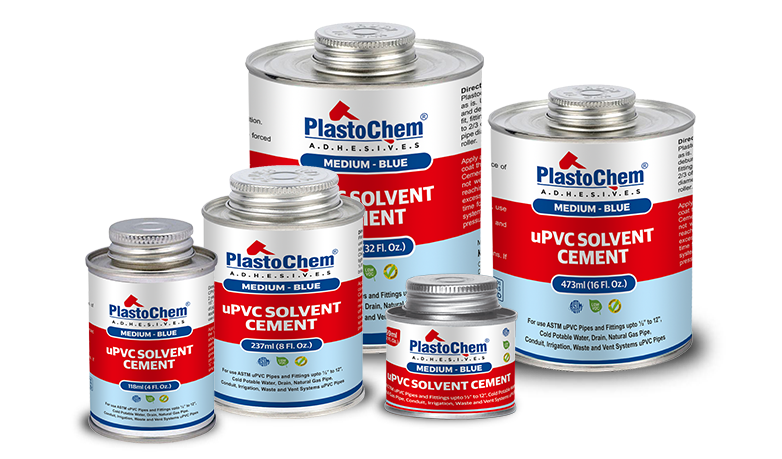
What is Solvent Cement and Why is it Essential for CPVC Piping Systems?
Chlorinated polyvinyl chloride (CPVC) pipes and fittings are increasingly being used in various industrial applications due to their superior resistance to corrosion, high temperatures, and harsh chemicals. Unlike traditional metallic pipes, CPVC systems do not corrode when exposed to mineral acids, bases, and salts, making them ideal for industries such as mineral processing, chemical manufacturing, power generation, and wastewater treatment.
To assemble CPVC piping systems, several methods can be used, including flanging, threading, and mechanical joining. However, the most widely recommended and preferred method is solvent cementing. This technique is fast, efficient, and produces highly durable joints that are stronger than the pipe or fitting alone.
Understanding Solvent Cement
One common misconception about solvent cement is that it functions like glue. In reality, solvent cement does not merely bond surfaces together; it chemically fuses them into a single, unified structure. Solvent cement is composed of CPVC resin, stabilizers, and fillers dissolved in a blend of solvents, which play two key roles:
Dissolving the CPVC Resin: The solvent components break down the surface layer of the CPVC pipe and fitting, loosening its molecular structure.
Surface Preparation: The solvents soften the outer layer of the pipe and fitting, allowing the material to fuse seamlessly when joined.
When applied, solvent cement penetrates and temporarily softens the CPVC material. A precisely engineered taper in the fitting socket creates an interference fit, ensuring optimal contact between the pipe and fitting. As the solvent evaporates, the pipe and fitting molecularly fuse, forming a joint that is uniform, leak-proof, and structurally integral.
Additionally, solvent cement contains stabilizers that extend its shelf life by preventing degradation due to heat and oxidation, ensuring consistent performance over time.
Why is Solvent Cement the Preferred Joining Method for CPVC?
At Plastochem Industrial Systems, we highly recommend solvent cement for CPVC piping due to its numerous advantages:
Fast and Reliable: The joining process is quick and provides an exceptionally strong and durable bond.
Uniform Bonding: The fused joint maintains all the essential properties of CPVC, including pressure resistance, heat tolerance, and chemical stability.
Enhanced Safety: The chemical fusion process eliminates weak points that could lead to leaks or system failures over time.
Types of Solvent Cement

Solvent cement is categorized based on its viscosity, which is determined by the amount of CPVC resin present in the solution. Higher resin content results in greater viscosity, allowing the cement to fill gaps more effectively and create stronger joints. The three main viscosity categories are:
Regular-bodied: Best for smaller diameter pipes, offering fast application and setting.
Medium-bodied: Suitable for moderate-sized pipes, providing a balance between flowability and strength.
Heavy-bodied: Ideal for large-diameter and industrial-grade CPVC pipes, offering the highest strength and gap-filling capability.
The correct solvent cement type should be selected based on pipe diameter, schedule, and application. The ASTM Standard Specification for Solvent Cements for CPVC Plastic Pipe and Fittings provides guidelines for selection, though manufacturer recommendations should always be followed.
Solvent Cement for Industrial Applications
For industrial CPVC piping, heavy-bodied solvent cement is generally recommended. However, because these solutions contain a higher percentage of resin and less solvent, a primer is often required. Primers help soften the pipe and fitting surfaces before applying solvent cement, enhancing the fusion process and ensuring a secure, long-lasting bond.
Solvent Cement for Highly Corrosive Environments
In applications involving highly aggressive and corrosive chemical streams, specialized solvent cements are available. These advanced formulations do not contain fillers that could degrade when exposed to specific chemicals, ensuring the integrity and longevity of the piping system.
Before selecting a solvent cement, always verify its compatibility with the intended application by reviewing the manufacturer’s specifications and labels.